

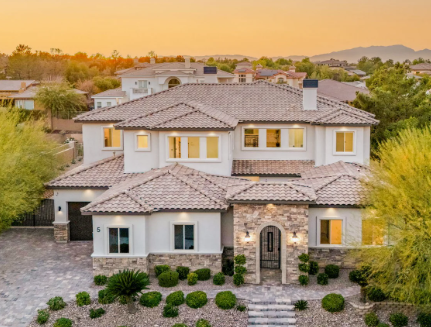
In Las Vegas luxury real estate, the neighborhood can matter even more than the house itself. A striking kitchen, expansive square footage, and sophisticated smart-home systems are valuable, but they do not change a long daily drive, unexpected noise, limited privacy, or community rules that do not fit your plans. The right setting should support how you want to live, entertain, travel, and use the property over time.
For buyers comparing estates, golf communities, high-rise residences, and guard-gated enclaves, Las Vegas real estate experts Brady Luxury Homes offers buyer representation, neighborhood guidance, and luxury property resources across Las Vegas and Henderson. Brady Luxury Homes focuses on helping buyers and sellers evaluate high-end opportunities in areas such as Summerlin, The Ridges, and Henderson, where location, community standards, lot quality, and resale potential can differ significantly from one neighborhood to the next.
- Start With Your Daily Routine
- Compare Location by Real Travel Time
- Understand the Main Types of Luxury Neighborhoods
- Look Beyond the Listing Price
- Evaluate the Lot, Views, and Desert Conditions
- Read HOA Documents Early
- Use Market Data Carefully
- Build a Neighborhood Scorecard
- Choose the Setting Before the House
Start With Your Daily Routine
Before comparing price ranges, define how the home will serve you. A primary residence has different needs than a seasonal retreat or a lock-and-leave second home. Buyers who entertain frequently may prioritize guest parking, a large kitchen, outdoor living space, and proximity to dining. Others may prefer a quieter setting, a private office, a four-car garage, or a home near trails and fitness amenities.
Make a short list of non-negotiables. Consider whether you want golf access, a concierge, a pool, a guest casita, room for visiting family, mountain views, Strip views, or easy airport access. This exercise often narrows the search faster than setting a price ceiling alone.
Compare Location by Real Travel Time
A map can make two communities appear equally convenient, but real driving conditions may tell a different story. Test the route to work, the airport, medical care, schools, favorite restaurants, and regular activities. Visit during morning and evening traffic, then return during a weekend or major event period to understand how the area feels at different times.
- Check access to major roads and highways.
- Listen for traffic, construction, venue activity, and commercial noise.
- Consider whether guests, vendors, and service providers can reach the home easily.
- Think about convenience during both full-time living and seasonal visits.
A smaller residence in a well-located neighborhood may be a better long-term choice than a larger home that requires more upkeep and adds substantial travel time every day.
Understand the Main Types of Luxury Neighborhoods
Guard-Gated Communities
Guard-gated communities appeal to buyers who value controlled entry, privacy, and a more defined neighborhood environment. However, buyers should ask about guest procedures, gate access, security coverage, delivery policies, and emergency access. Higher privacy and shared amenities can also mean higher association fees.
Master-Planned Communities
Master-planned areas can offer parks, trails, retail, recreation, schools, and a strong sense of convenience. They may contain several distinct villages, each with different lot sizes, architectural styles, fees, and rules. Review future development plans, since nearby construction or new retail can affect traffic, views, and the neighborhood experience.
Golf and Resort-Style Areas
Golf-oriented communities may provide scenic fairway views, club dining, fitness facilities, pools, and social programming. Do not assume that a home purchase includes club membership. Ask about initiation fees, monthly dues, food-and-beverage minimums, transfer rules, and whether memberships are optional, required, or subject to availability.
High-Rise and Lock-and-Leave Residences
Luxury condos can suit frequent travelers and buyers who prefer minimal exterior maintenance. Concierge services, secured parking, central locations, and elevated views may be compelling advantages. Compare monthly dues, reserve funding, parking assignments, storage, rental restrictions, pet rules, and the scope of building services before making an offer.
Look Beyond the Listing Price
The purchase price is only one part of the ownership decision. Large homes, custom estates, and amenity-rich communities can have very different monthly and annual costs, even when their listing prices are similar.
- Property taxes and homeowner’s insurance.
- HOA, master association, or condominium dues.
- Private club fees and minimum spending obligations.
- Pool service, landscape maintenance, and irrigation.
- Utilities for large interior spaces and outdoor features.
- Maintenance for gates, elevators, specialty finishes, and smart-home systems.
- Potential special assessments for shared facilities or major repairs.
Evaluate the Lot, Views, and Desert Conditions
In the Las Vegas Valley, the setting around a home can influence comfort as much as the home’s interior. Study sun exposure from the main living spaces and outdoor areas. A west-facing patio may be spectacular at sunset, but it can also receive intense afternoon heat. Check privacy from nearby homes, roads, and golf paths, and evaluate views from rooms you will use most often.
Also inspect drainage, grading, retaining walls, mature landscaping, and pool equipment. Desert wind, dust, heat, and irrigation needs can create maintenance demands that are easy to overlook during a brief showing.
Read HOA Documents Early
Association rules can shape renovations, leasing, parking, landscaping, exterior finishes, and everyday use of the property. Request governing documents as early as possible, then review them carefully with the appropriate real estate and legal professionals. Nevada’s common-interest community statutes provide useful background on the framework governing many homeowner associations and condominium communities.
- Confirm restrictions on renovations, paint colors, landscaping, solar equipment, and exterior additions.
- Review short-term rental and long-term leasing policies.
- Ask about architectural review requirements and approval timelines.
- Check vehicle, guest parking, and garage-use rules.
- Investigate pending assessments, litigation, reserve concerns, and capital projects.
Use Market Data Carefully
Citywide averages can be misleading in a luxury market with custom homes, high-rise inventory, golf properties, and new construction. Compare recent closed sales within the same community, then consider condition, lot placement, views, upgrades, and time on market. Market reports on luxury real estate trends can be a useful starting point for understanding broader listing trends, but active listing prices are not the same as completed sale prices.
Focus on median listing price, price per square foot, active competition, days on market, price reductions, sale-to-list ratios, and differences between resale and new construction. Price per square foot is helpful, but it cannot fully measure privacy, architectural quality, lot size, views, or functional design.
Build a Neighborhood Scorecard
Compare three to five communities using the same criteria. Score each category from one to five, then add notes explaining the score.
- Lifestyle fit: Does the area match your preferred pace, hobbies, and entertaining style?
- Location: Are work, travel, dining, services, and recreation convenient?
- Privacy: Does the neighborhood provide the quiet and separation you want?
- Ownership cost: Are dues, taxes, insurance, and upkeep comfortable for your budget?
- Community rules: Do restrictions support your intended use of the home?
- Resale appeal: Will future buyers value the same features that matter to you?
Choose the Setting Before the House
The strongest luxury purchase is usually one that balances lifestyle, location, privacy, ownership costs, and long-term appeal. First, choose the type of community that fits your routine. Next, compare travel times, rules, amenities, and recent sales. Finally, evaluate individual homes for condition, layout, views, lot quality, and maintenance needs. This approach creates a clearer path to a Las Vegas home that works well today and remains attractive in the years ahead.

